
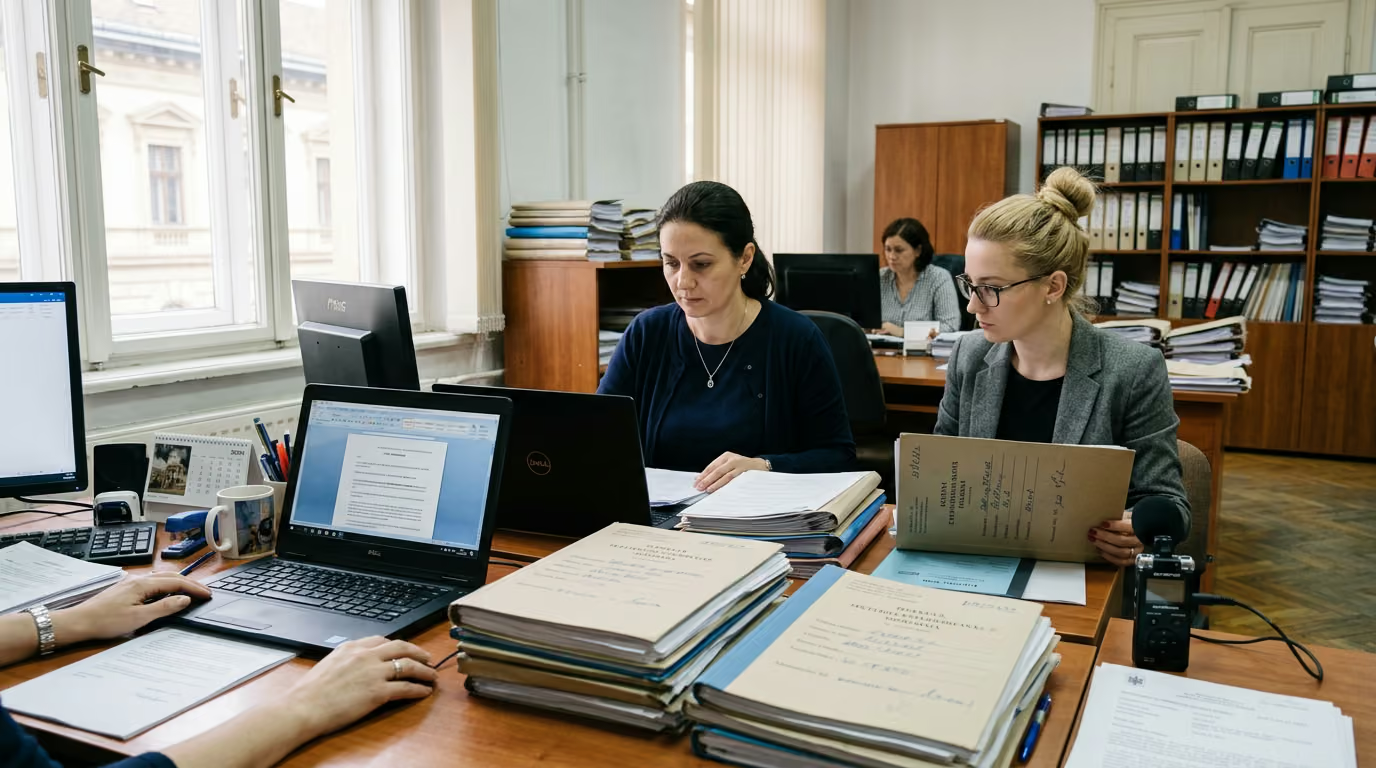
A normal workday has eight hours. Unfortunately, for many lawyers, notaries, and court clerks, two, three, or even four of those hours seem to disappear into thin air. They do not appear in any official file, they cannot be billed to a client, and they do not create direct added value. Where do they go? Into repetitive, exhausting work: transcribing recordings from hearings or meetings, drafting notes, and manually searching through long audio files.
A global reference study published by PR Newswire shows a harsh reality: 42% of legal professionals lose between 2 and 5 hours per day on administrative work, while 6% exceed 5 hours daily. In practice, time is consumed by necessary but low-leverage tasks that can be automated so professionals can focus on higher-impact work.
In many legal markets, this pressure is felt every day, but granular data on transcription time is still limited. Teams can usually track broad workload indicators, case volume, and staffing pressure, yet few organizations measure exactly how many hours lawyers, clerks, notaries, and legal support staff lose to manual transcription.
This article reviews international findings and offers a realistic estimate for legal teams that still rely on manual transcription.
Half the Day Is Lost to Work That Cannot Be Billed
For a law firm, time is money in the most direct sense. The billable hour is the foundation of the business. When almost half the day goes into administrative work, this is no longer a minor inconvenience. It is a direct loss of productive capacity.
The same pattern appears in public-facing legal roles. Court clerks, notaries, bailiffs, and legal departments do not necessarily measure time in billable hours, but the loss is just as real: slower files, delayed documents, and less time for work that requires legal judgment.
Manual transcription is especially damaging because it demands attention without using the professional's expertise. You must listen, pause, rewind, type, correct names, and check the context. It is slow, repetitive, and mentally tiring.
What You Gain When Software Does the Heavy Work
The practical gains are easy to calculate. If a lawyer saves only 5 hours per week, that means more than 250 hours recovered in a year. For a small team, the annual gain quickly becomes hundreds or thousands of hours.
The benefit is not only financial. Recovered time can go into client strategy, case preparation, document review, legal research, or simply into reducing overtime. For courts and public institutions, this means more capacity without adding headcount.
AI transcription does not eliminate human review. It removes the raw typing stage. The professional still validates the final text, but the work changes from manual production to quality control. For a concrete legal workflow, see the guide on transcribing client phone consultations under GDPR.
The Tasks That Consume the Most Time
Across legal teams, the same administrative tasks appear again and again:
- Transcribing hearings, meetings, interviews, and depositions.
- Drafting internal notes and preliminary reports.
- Searching for specific information inside recordings or case archives.
- Preparing and formatting documents for filing.
- Handling routine email and client correspondence.
Transcription is usually at the top because it is the most mechanical of these tasks. It is also the easiest to automate safely when the workflow includes review and data protection.
Legal Burnout Comes from Repetition, Not Lack of Vocation
Burnout in the legal profession is often explained through pressure, responsibility, and workload. Those factors are real, but repetition plays a major role. Professionals burn out faster when they spend hours on tasks that do not use the skills they trained for.
Manual transcription is exactly this kind of task. It requires concentration, but not legal reasoning. It consumes attention without producing the feeling of meaningful progress. Removing it from the daily workflow is one of the simplest ways to reduce friction and recover energy.
Conclusion: From Frustration to Efficiency
The data points in one direction: legal professionals lose a significant part of their day to administrative work, and transcription is one of the biggest time sinks. AI transcription is not a magic replacement for legal expertise, but it is an efficient way to remove repetitive work from the system.
For lawyers, notaries, clerks, and public institutions, the opportunity is clear: keep professional judgment where it belongs, and let software handle the raw conversion from audio to text.
Frequently Asked Questions (FAQ)
How much time do lawyers lose on administration and transcription?
International studies show that many legal professionals spend between 2 and 5 hours per day on administrative tasks. Transcription and note drafting are consistently among the most time-consuming activities.
How many hours can AI transcription save each week?
For light use, even 1-5 hours per week is realistic. For professionals who handle many recordings, savings can exceed 10 hours per week.
Is there official data on this topic?
Granular data is still limited in many markets. Broad figures exist for legal workloads, court backlogs, and staffing pressure, but there are few complete studies on time lost specifically to manual transcription.
How does technology help prevent legal burnout?
By removing mechanical and repetitive work. AI transcription gives professionals back time for judgment, strategy, client communication, and recovery.
Try VorbeAI on your own recording
Upload your audio or video and get an accurate transcript with speaker labels and time codes, ready to export. EU-hosted, GDPR-compliant.
Keep reading
More articles you might find helpful.
Practical Guide for Local Government Secretaries: How to Automate Council Meeting Transcription
A practical guide for local government secretaries: legal framework, workflow, and criteria for AI transcription of local council meetings.

Transcribed Phone Consultations in Law Firms: GDPR Rules, Risks, and Best Practices
How law firms can legally record and transcribe client phone consultations under GDPR, with consent rules, data security risks, and practical best practices.
How to Get More Accurate Audio Transcriptions: Tactics That Actually Work
Tired of messy transcripts full of errors? Discover 10 practical tactics to improve AI transcription accuracy by optimizing your audio recordings.