
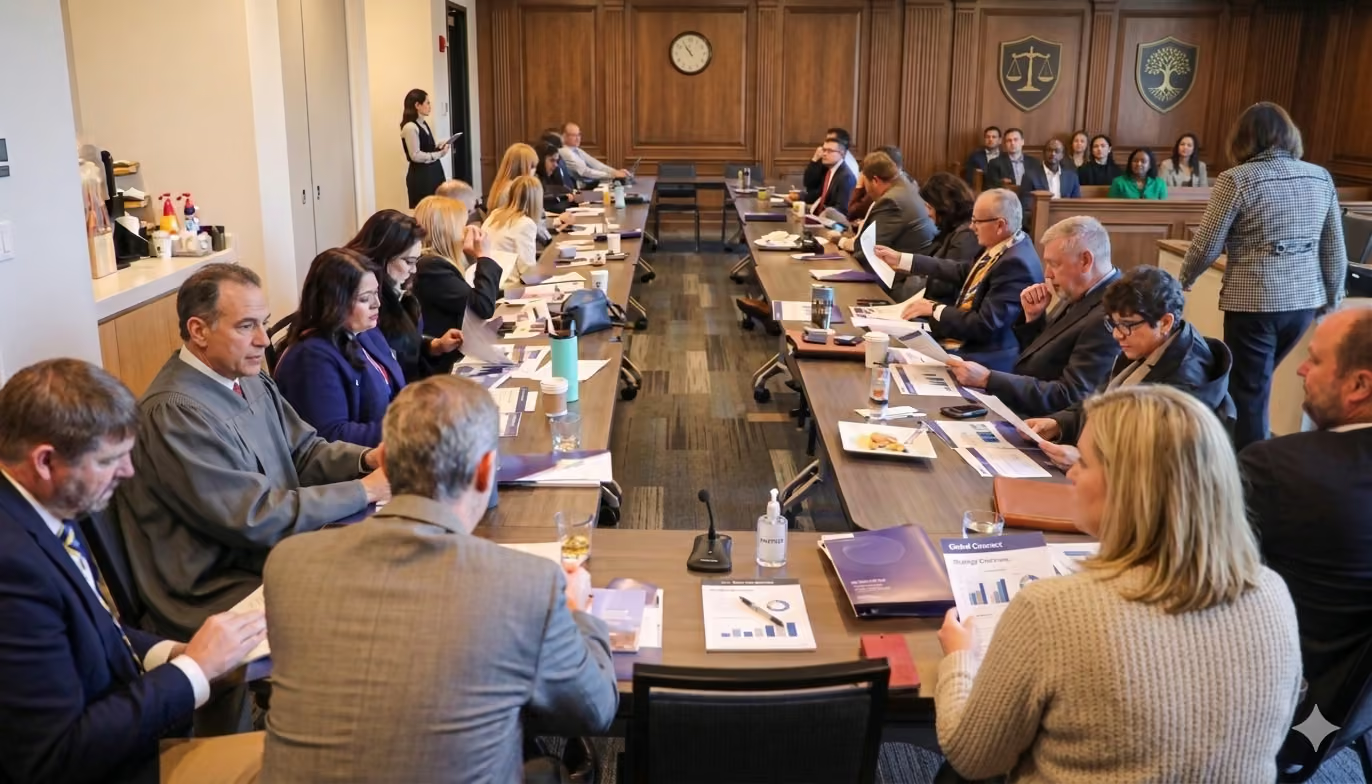
Monday morning, the coffee is getting cold on the desk, and pressure is rising. Yesterday's local council meeting lasted more than three hours. In front of you are the agenda folder, a notebook full of hard-to-read notes, and a huge audio file of more than 2 GB. The minutes must be published by Thursday, and six other urgent files are waiting.
If you choose manual transcription, you already know what happens: today and half of tomorrow will disappear into listening and typing.
This is the daily reality for many local government secretaries and municipal clerks. Across public administration, the administrative workload can be overwhelming. Every meeting must be recorded, archived, and made available through the appropriate transparency process. Current technology will not replace the expertise of a public official, but it can remove the raw transcription burden completely, turning hours of recording into editable text in less than two hours.
Legal Framework: Digital Meetings and Public Records
Using modern tools is not just a personal preference. In many jurisdictions, local council meetings are public records and must be documented, archived, and made available according to transparency rules. For a broader public-sector view, the OECD open government resources are a useful reference point.
Modern documentation tools can include audio recording, secure storage, and transcription software, as long as the data remains under the institution's control. The key requirement is not the tool itself, but whether the workflow is secure, compliant, and appropriate for institutional data.
The Six-Step Workflow: From Audio Recording to Final Document
A clear workflow is essential if the institution wants good results with minimal effort:
- Record the meeting with a microphone suitable for a council room.
- Upload the audio file immediately after the meeting.
- Let the platform transcribe and separate speakers automatically.
- Review the text for names, street names, legal terms, votes, and decisions.
- Export the final version in DOCX or PDF.
- Publish the approved document in the transparency section of the institution's website.
This workflow does not remove the official's responsibility. It removes the slowest part of the work: raw transcription.
Where Software Ends and Official Responsibility Begins
AI handles technical tasks, while the responsible official remains accountable for the legal substance. This distinction is important: the software is a productivity tool, not a legal decision-maker.
Tasks handled by technology | Responsibilities kept by the public official |
|---|---|
Fast conversion of sound into editable text. | Verifying decisions and signing or countersigning official documents. |
Speaker diarization and initial transcript structure. | Drafting and editing the official minutes, including votes and decisions. |
Timestamps and navigation markers for easier review. | Ensuring compliance, publication rules, and archive integrity. |
For the wider time-saving argument, see the pillar guide on hours lost to manual transcription in legal work.
Data Security and GDPR in Public Administration
Local council meetings are public, but that does not mean every piece of information mentioned during a meeting can be published without review. Personal data, addresses, identification numbers, health information, or individual-case discussions must be treated carefully.
Choose a platform that stores data in the European Union, encrypts files, and allows deletion after processing. For public institutions, these are not optional features. They are part of responsible administration.
How to Choose the Right Solution for Your Local Government Office
When evaluating providers, use clear criteria:
- Accuracy in the working language, tested on real meeting recordings.
- Recognition of multiple speakers in a room with 15-20 participants.
- Flexible export formats that preserve speaker structure in DOCX and PDF.
- Clear confidentiality policies and deletion options.
- Predictable costs compared with the hours saved by the institution's staff.
A real test matters more than a demo. Upload a recording from an actual meeting and check the results before committing.
Conclusions and Next Steps
Modernizing local administration does not require huge budgets. It requires smart workflow decisions. Moving from manual transcription to automated transcription gives public officials back valuable time for complex legal and administrative tasks that require human expertise.
For local councils, this means faster publication, better transparency, and less administrative pressure on already overloaded staff.
Try VorbeAI on your own recording
Upload your audio or video and get an accurate transcript with speaker labels and time codes, ready to export. EU-hosted, GDPR-compliant.
Keep reading
More articles you might find helpful.
How Many Hours Do Legal Professionals Really Lose to Manual Transcription?
Studies show lawyers lose 2 to 5 hours daily to administrative work. See how AI transcription helps recover that valuable time.

Transcribed Phone Consultations in Law Firms: GDPR Rules, Risks, and Best Practices
How law firms can legally record and transcribe client phone consultations under GDPR, with consent rules, data security risks, and practical best practices.
How to Get More Accurate Audio Transcriptions: Tactics That Actually Work
Tired of messy transcripts full of errors? Discover 10 practical tactics to improve AI transcription accuracy by optimizing your audio recordings.